
Mel Quinn,
Orkney Galloways
Kirkwall,
Orkney
September 2026
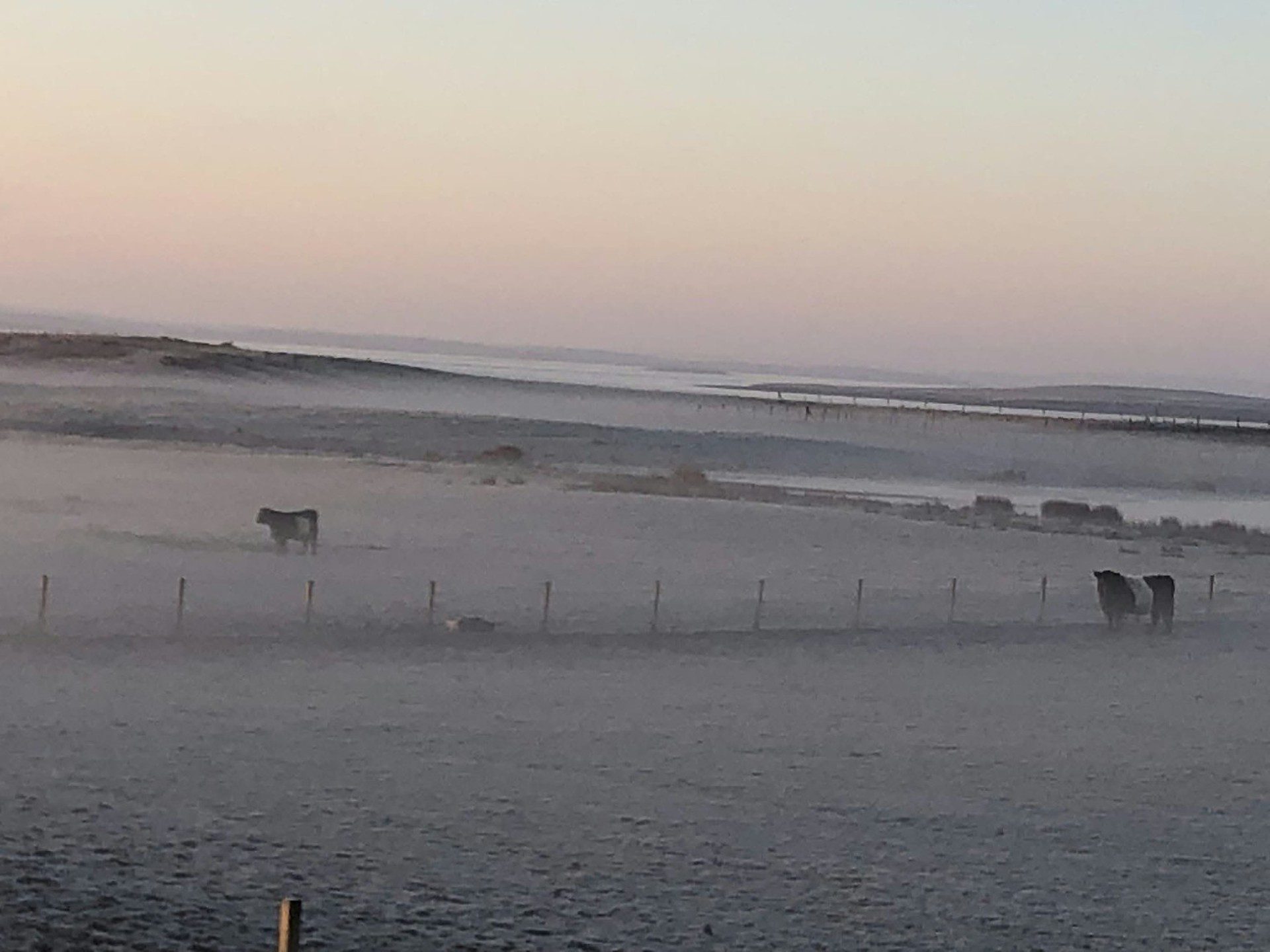
Traditional cattle in a changing livestock industry
There is considerable discussion at present about the future direction of cattle breeding. Genomics, performance recording, environmental targets and changes to agricultural support can sometimes make it sound as though the future belongs entirely to increasingly specialised cattle.
For Belted and White Galloways, the evidence points in a rather different direction.
Modern agriculture is beginning to measure much more than growth rate and carcass weight. Fertility, calf survival, productive lifespan, mature cow size, health, feed efficiency and the ability of an animal to perform within a particular farming system are becoming increasingly important.
These are not peripheral traits. They are increasingly part of how livestock efficiency itself is being defined. For the Galloway, that matters.
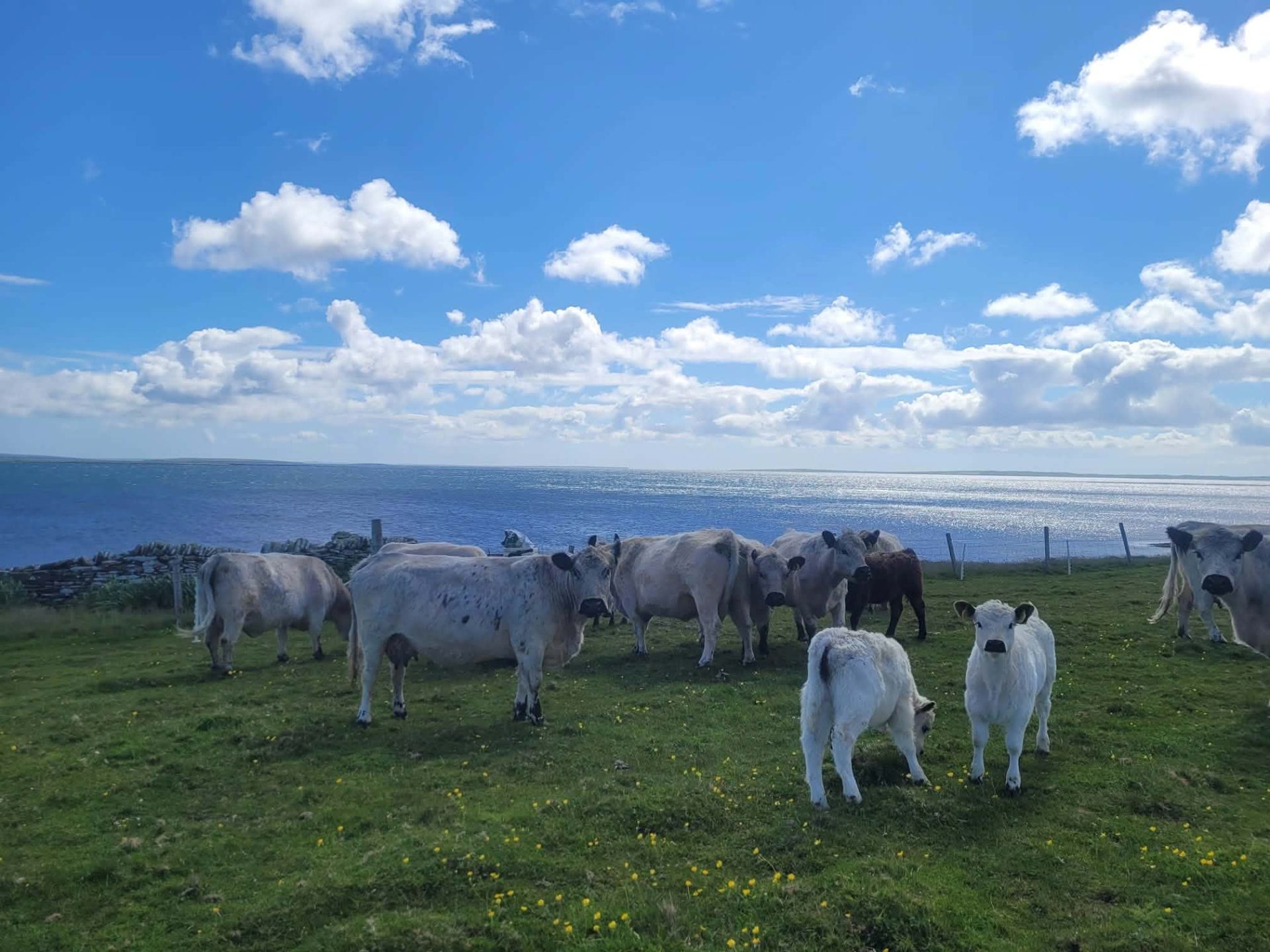
A FUNCTIONAL ANIMAL FOR THE LAND – Scotland’s current agricultural policy specifically encourages farmers and crofters to consider cattle breeds suited to their environment and farming system.
The Scottish Government’s 2026 Code of Practice on Sustainable and Regenerative Agriculture goes further. Under “Environmentally Favourable Cattle Breeds”, it recognises cattle able to thrive on coarser vegetation and wetter ground, including native breeds, and identifies their contribution to biodiversity and low-input farming. That is a significant change in emphasis.
Rather than asking how land can be altered to obtain maximum production from an animal, future farming increasingly asks whether the animal is appropriate for the land on which it is expected to work.
For extensive grassland, rough grazing, wet ground and conservation systems, this brings many traditional Galloway characteristics directly back into focus.
Moderate mature size, hardiness, maternal ability, longevity and the capacity to utilise relatively coarse forage are not simply interesting characteristics inherited from an old breed. They are functional characteristics with modern economic and environmental value.
Research involving Galloways under extensive conditions continues to demonstrate their suitability for low-input grazing systems. Galloways have also been used successfully in wetland restoration, upland management and landscape-scale conservation projects in Britain and continental Europe.
The important point is not that a Galloway must outperform every other breed in every individual measurement. Conservation and extensive farming are whole systems.
An animal must remain healthy, fertile, manageable and productive while grazing the vegetation actually available, under the climate and ground conditions of the site, without requiring the land to be fundamentally changed to accommodate it.
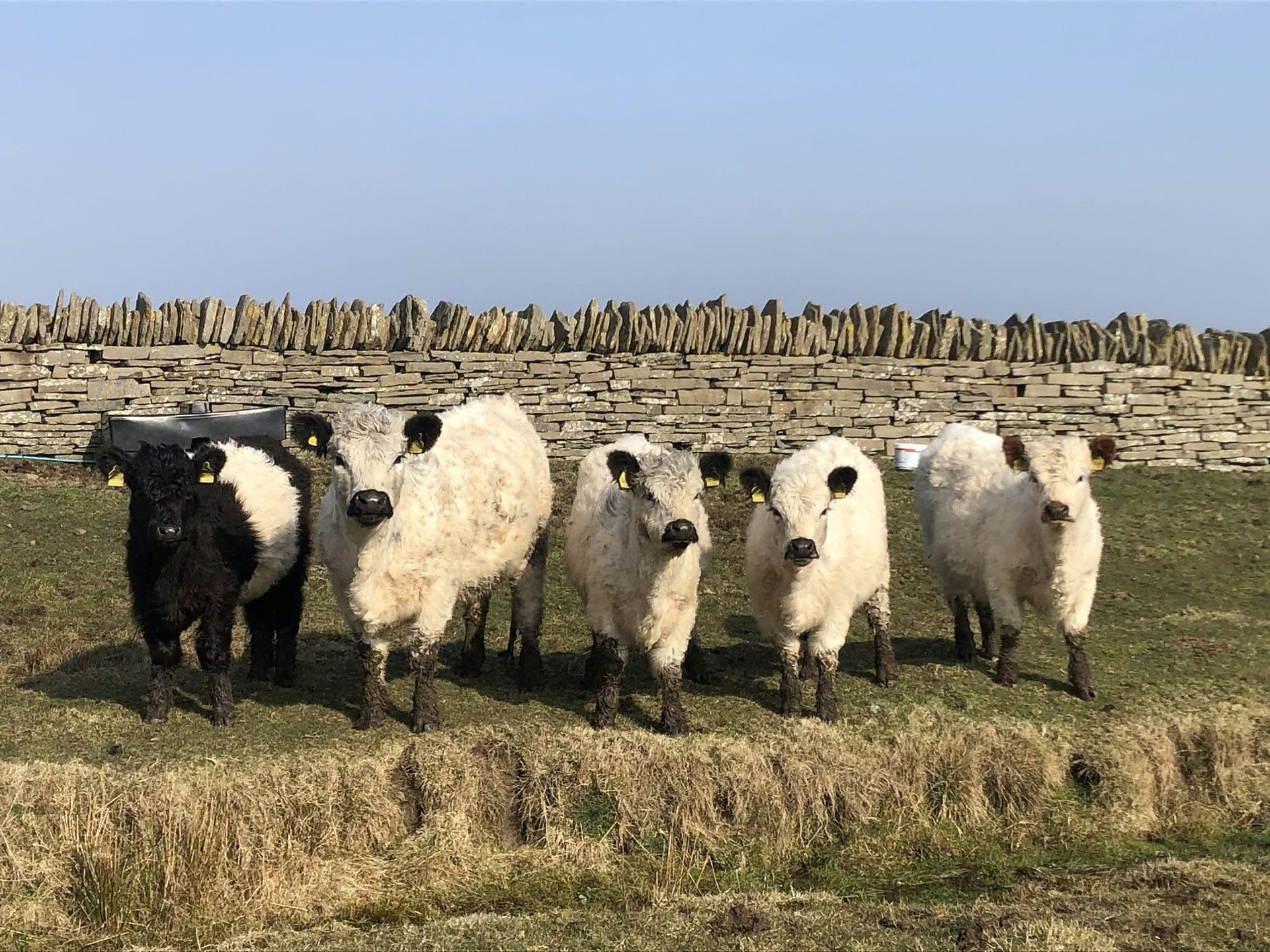
MODERN BREEDING IS ALSO CHANGING – The direction of livestock genetics is particularly relevant.
AHDB’s National Beef Evaluations now include maternal traits such as age at first calving, calf survival and productive lifespan alongside conventional growth and carcass measurements.
Quality Meat Scotland is similarly highlighting fertility, survival, longevity and efficiency as important components of future suckler-beef performance. This should not be seen as a threat to the Galloway. It is an opportunity.
Modern recording and genetic tools can be used within Belted and White Galloway populations to identify animals which best express the useful characteristics of the breed.
The objective does not need to be to turn a Galloway into a faster-growing version of another breed. We can instead become better at identifying the best functional Galloways.
That means taking seriously traits such as regular calving, calf survival, maternal performance, mature cow weight, structural soundness, health, temperament, productive lifespan and the ability to rear calves from forage-based systems.
For cattle working in conservation or extensive systems, we should also be interested in the circumstances under which that performance is achieved.
A cow performing well from unimproved or semi-natural grazing with modest supplementary inputs is doing something biologically and economically different from an animal whose performance depends upon a substantially more intensive system.
If we want the value of the Galloway recognised in the future livestock industry, increasingly we need to record and demonstrate that difference.
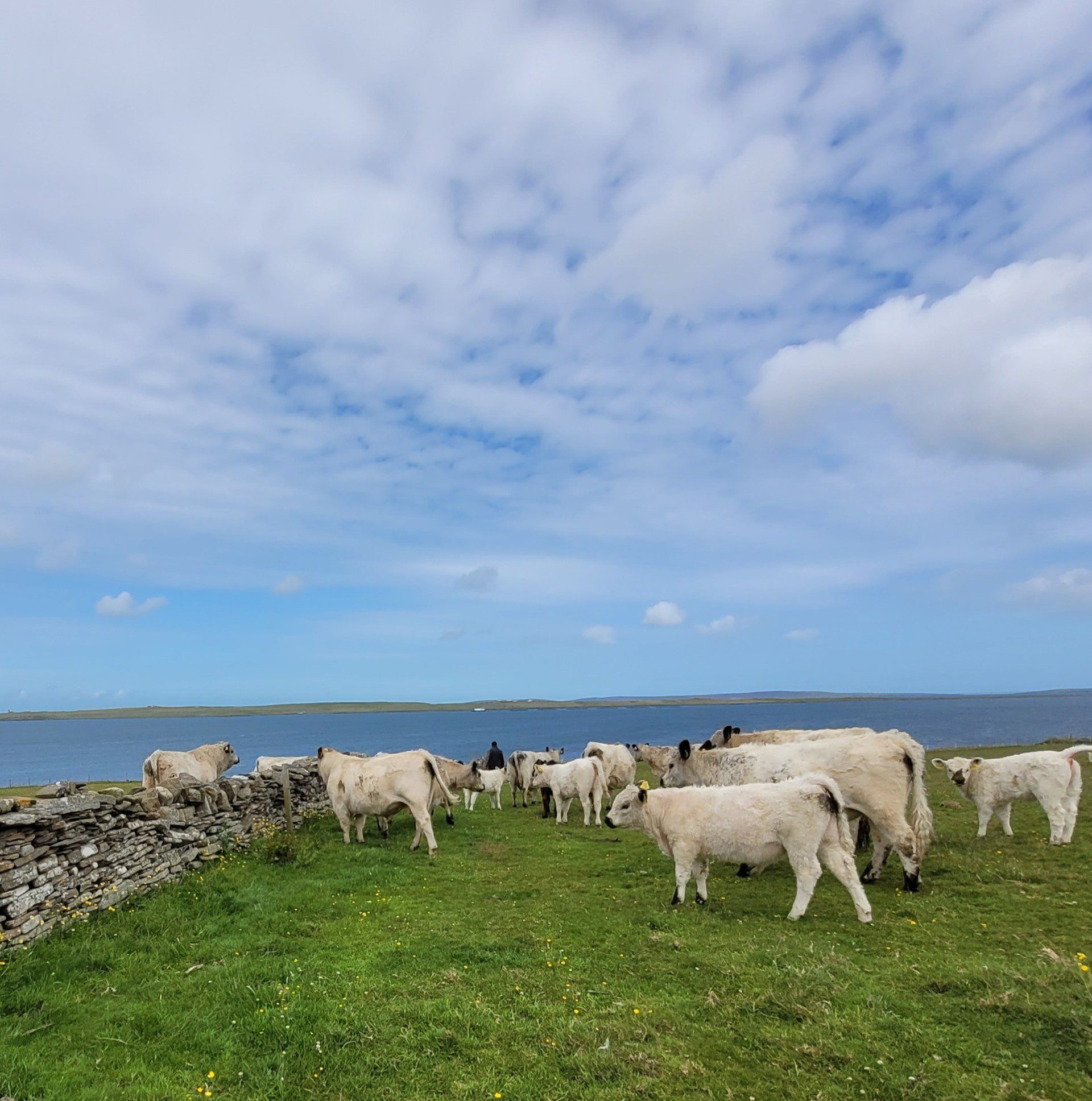
GENETIC DIVERSITY MATTERS TOO – Perhaps one of the most important recent developments comes from the UK Genetics for Livestock and Equines Committee.
Its 2025 advice on native breed conservation stresses the importance of maintaining genetic diversity within native breeds and identifies locally adapted breeds as valuable resources for future food production, resilience and adaptation.
Its advice is not to preserve a tiny genetic snapshot of an old breed. It is to conserve the genetic diversity of the whole breed while retaining and developing useful characteristics. That principle is important for Belted and White Galloways. Our older genetics are not valuable merely because they are old.
They may contain combinations of adaptation, hardiness, maternal function, longevity and other characteristics which become increasingly valuable as farming systems change. Genetic conservation and genetic improvement are therefore not opposites. Good breed stewardship requires both.
THE OPPORTUNITY FOR GALLOWAYS – Scotland’s 2026-2031 Rural Support Plan places food production alongside animal health and welfare, climate resilience and nature restoration. Its enhanced and elective tiers specifically support actions for climate, biodiversity, habitats and sustainable farming.
At the same time, livestock breeding is becoming increasingly capable of identifying functional and maternal performance within populations. Those two developments create a considerable opportunity for the Galloway. The future of the breed does not depend upon turning it into a different kind of animal.
It depends upon understanding, protecting and demonstrating the qualities that have allowed Galloways to remain productive in demanding environments for generations – and then using modern recording and genetic tools intelligently to strengthen those qualities.
A cow that calves regularly, rears her calf, remains sound for many years, maintains herself economically, works successfully on wet or coarse ground and produces food while also helping manage valuable habitat is not an outdated animal. She is delivering several of the things modern agriculture is now being asked to achieve at the same time.
The challenge for the Belted and White Galloway community is therefore not simply to preserve the past. It is to demonstrate, with modern evidence, just how relevant the functional Galloway is to the future. 🖤
REFERENCES
Scottish Government (2026). Code of Practice on Sustainable and Regenerative Agriculture.
Scottish Government (2026). Rural Support Plan 2026-2031.
UK Genetics for Livestock and Equines Committee (2025). UKGLE Advice on Native Breed Conservation. Department for Environment, Food and Rural Affairs.
Agriculture and Horticulture Development Board. National Beef Evaluations.
Quality Meat Scotland (2025). Building a More Efficient Scottish Beef Herd: 20 Years of Genetic Progress.
Fraser, M.D., Moorby, J.M., Vale, J.E. and Evans, D.M. (2014). Mixed Grazing Systems Benefit Both Upland Biodiversity and Livestock Production. PLoS ONE 9(2): e89054.
Schaich, H., Szabó, I. and Kaphegyi, T.A.M. (2010). Grazing with Galloway cattle for floodplain restoration in the Syr Valley, Luxembourg. Journal for Nature Conservation 18: 268-277.
Varga et al. (2024). Research on Galloway and Highland cattle performance under extensive pasture conditions.